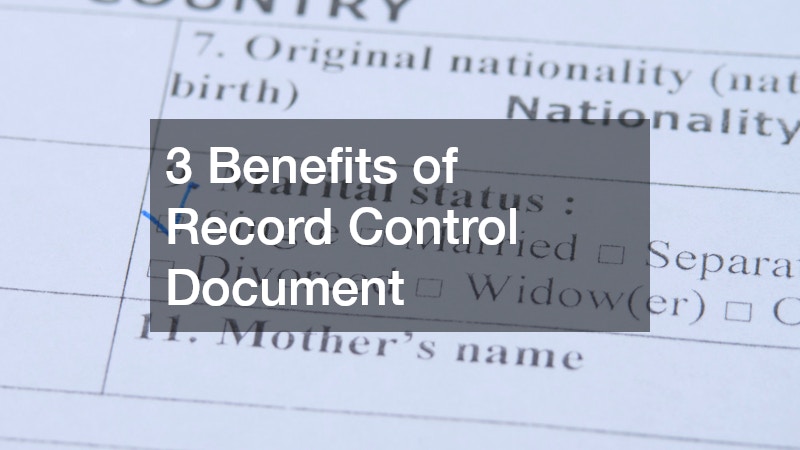
In this article, we will explore the benefits of record control documents. These documents are essential for maintaining the accuracy, safety, and reliability of records in various industries. As businesses increasingly rely on data, understanding the value of record control becomes crucial.
Why is a Record Control Document Important?
Subsection: Ensuring Accuracy and Consistency
Record control documents play a critical role in ensuring that all records are accurate and consistent across various platforms and departments. By having standardized processes for managing records, businesses can avoid discrepancies that might arise due to human error or miscommunications.
Moreover, these documents facilitate uniformity in how information is recorded, making it easier to cross-reference and compile data when necessary.
This helps businesses maintain data integrity and make informed decisions based on reliable information. When decision-makers have access to accurate and consistent records, they can analyze trends, assess performance, and strategize effectively. Furthermore, accurate records serve as a reliable foundation for reports, thereby enhancing the organization’s transparency and accountability.
Having consistent data allows for seamless collaboration between different departments and teams within an organization. As record control documents outline procedures for data management, team members can easily follow shared protocols. This not only improves collaboration but also ensures that every employee is working with the same accurate information, ultimately leading to a cohesive and unified approach to achieving organizational goals.
How Do Record Control Documents Improve Compliance?
Subsection: Meeting Industry Standards
Compliance is a major concern for many organizations. Record control documents help businesses meet industry standards and regulations by systematically organizing and tracking documents. For industries that are heavily regulated, such as finance and healthcare, maintaining compliance is essential to avoid hefty fines and legal ramifications.
This reduces the risk of non-compliance and potential legal issues. When records are systematically organized, it is easier to undergo audits and demonstrate adherence to industry-specific guidelines. Additionally, well-managed records provide evidence of compliance, which is crucial in case of disputes or investigations.
In addition to legal compliance, record control documents encourage best practices within an industry by aligning operations with established standards. They ensure that a business’s operations are not just legally compliant but also efficient and effective. As industries evolve, these documents can be updated to reflect new regulations or standards, thus keeping the organization proactive rather than reactive. Furthermore, they support environmental compliance efforts by enabling efficient tracking and management of necessary documentation related to sustainability initiatives.
What is the Role of Record Control Document in Risk Management?
Subsection: Minimizing Errors and Disputes
By implementing effective record control documents, organizations can minimize errors and disputes. These documents establish clear guidelines for recording and handling data, which reduces the likelihood of mistakes due to data entry errors or misinterpretation of information. As such, employees are less likely to introduce errors into the system when manipulating or transferring data.
This section will delve into how accurate record keeping helps prevent mistakes and resolves conflicts more efficiently. In the event of a dispute, well-maintained records provide a clear, factual basis that can help quickly resolve issues. This not only saves time but also prevents further complications that may arise from unresolved disputes.
By reducing errors, organizations can safeguard their reputation and build trust with clients and stakeholders. Reliable records bolster client confidence, as they assure all parties involved that the business operates transparently and competently. Additionally, having a robust record control system in place can serve as a competitive advantage, signaling to potential clients that the organization takes risk management seriously and is committed to high standards of integrity.
How Do Record Control Documents Enhance Efficiency?
Subsection: Streamlining Workflow Processes
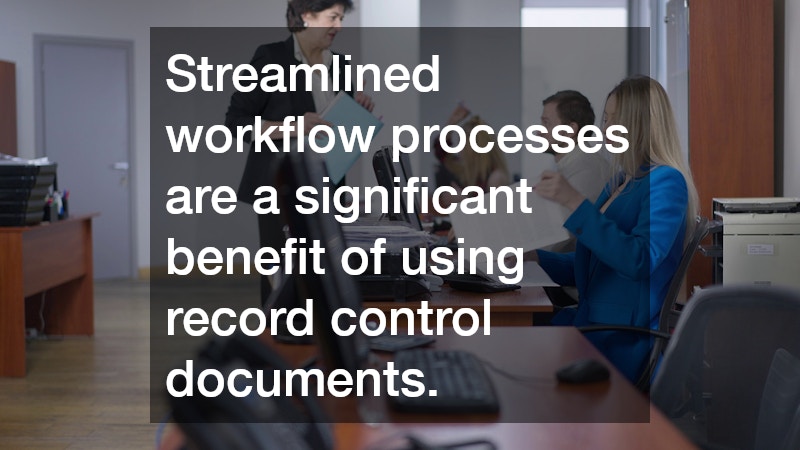
Streamlined workflow processes are a significant benefit of using record control documents. By enhancing document management, organizations can increase productivity and reduce time spent searching for and correcting record errors. The structure provided by record control documents helps employees locate the information they need quickly, freeing up time to focus on more strategic tasks.
This approach not only improves efficiency but also enhances communication within the organization. When everyone refers to consistent records and follows standardized procedures, there is less room for misunderstanding or miscommunications. This in turn facilitates smoother operations and better collaboration among team members.
Organizations can experience notable cost savings as streamlined processes reduce the resources spent on record-keeping activities. With less time devoted to rectifying errors and more efficient management of records, businesses can optimize their operational resources and potentially reallocate them to areas that drive growth and innovation. Furthermore, this efficiency can lead to improved customer satisfaction, as timely and accurate record handling often translates to better service delivery.
Record control documents offer numerous benefits, including ensuring accuracy, improving compliance, minimizing risk, and enhancing efficiency. Businesses that prioritize these documents in their operations can enjoy smoother processes, stronger compliance, and better data integrity. As data continues to play a vital role in business operations, understanding and implementing effective record control strategies is more important than ever.